Your Pics of plasma membrane and cell wall in hypotonic images are available in this site. Pics of plasma membrane and cell wall in hypotonic are a topic that is being searched for and liked by netizens now. You can Get the Pics of plasma membrane and cell wall in hypotonic files here. Download all royalty-free photos and vectors.
If you’re searching for pics of plasma membrane and cell wall in hypotonic images information connected with to the pics of plasma membrane and cell wall in hypotonic interest, you have visit the right site. Our website always gives you hints for downloading the highest quality video and image content, please kindly search and locate more enlightening video articles and graphics that match your interests.
Pics Of Plasma Membrane And Cell Wall In Hypotonic. Water will flow into the cell because it has a higher solute concentration compared to the solution. In fact the cytoplasm in plants is always slightly hypertonic compared to the cellular environment and water will always enter the plant cell if water is available. The vacuole and the cytoplasm shrink. Plasmolysis occurs when water.
 Difference Between Cell Wall And Cell Membrane Major Differences Cell Membrane Plasma Membrane Cell Wall From pinterest.com
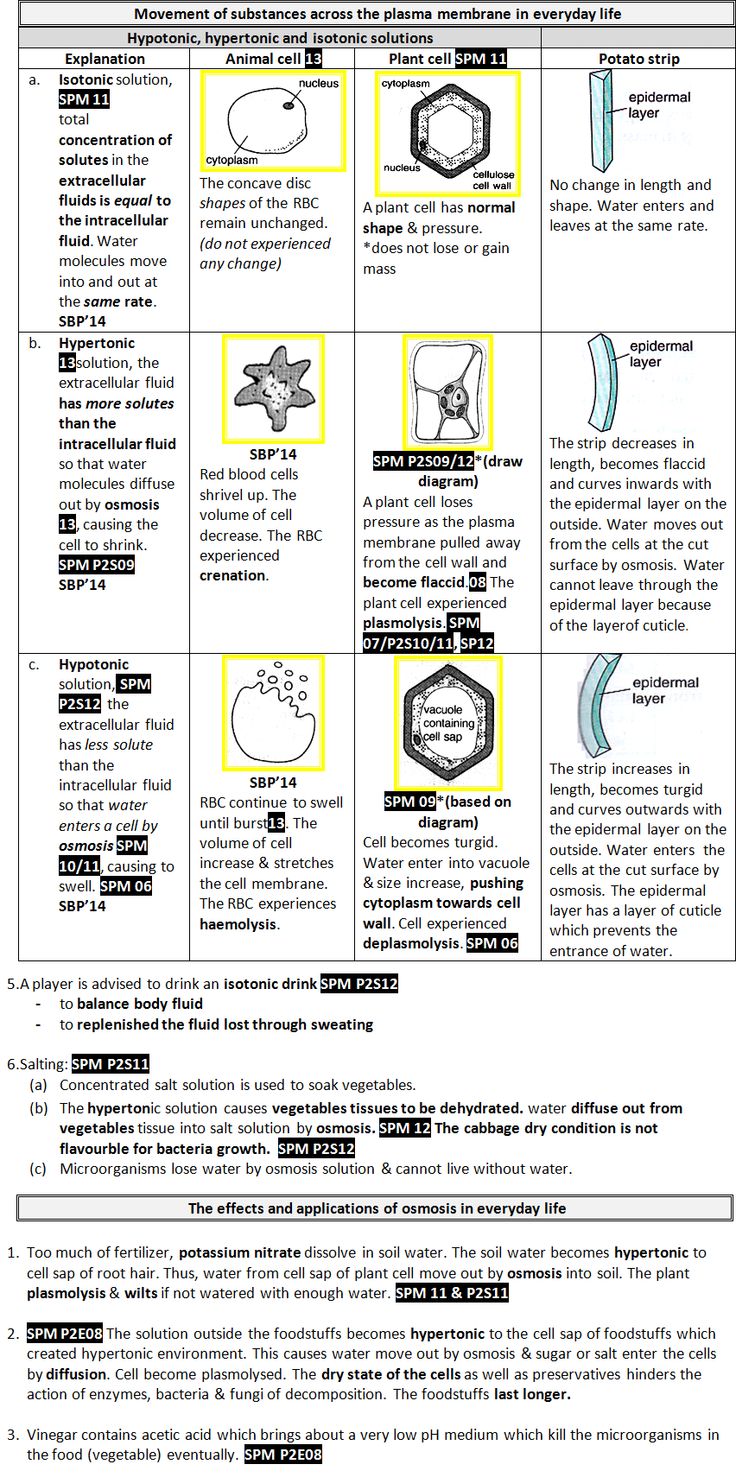
Thin barrier separating inside of cell cytoplasm from outside environment Function. B the plasma membrane allows some substances to enter or leave a cell more easily than others. Plant cells placed in a hypertonic solution will undergo plasmolysis a condition where the plasma membrane pulls away from the cell wall as the cell shrinks. The chloroplasts are spread throughout the cell both before the salt solution and after the distilled water is put onto the slide. This process is called plasmolysis. As water fills the cell and pushes against the cell wall turgor pressure is created.
Some organisms such as plants fungi bacteria and some protists have cell walls that surround the plasma membrane and prevent cell lysis.
This influx of water produces turgor pressure which stiffens the cell walls of the. –allows some molecules in while keeping others out. What is the result of placing a plant cell into a. When a cell is placed in a hypertonic solution water will leave the cell causing the cell volume to decrease and the cell will shrink a process known as crenation. In plant fungi and bacterial cells a cell wall is formed around the cell which keeps it from bursting. Membranes also exist within cells forming various.
 Source: pinterest.com
As a result the hypertonic solution will occupy the space between the plasma membrane and the cell wall. –allows some molecules in while keeping others out. In fact the cytoplasm in plants is always slightly hypertonic to the cellular environment and water will always enter a cell if water. This influx of water produces turgor pressure which stiffens the cell walls of the. In a hypotonic solution.
 Source: pinterest.com
The vacuole and the cytoplasm shrink. D plasma membranes must be very thick. –allows some molecules in while keeping others out. When water moves into a plant cell it swells against its rigid wall. Nonetheless concave plasmolysis can be reversed by placing the cell in a hypotonic solution.
 Source: pinterest.com
In extreme cases the cells can rupture in a process called osmotic lysis. As water fills the cell and pushes against the cell wall turgor pressure is created. If the solution has a high concentration of solute the cell may undergo plasmolysis where the plasma membrane detaches from the cell wall. Recovery of the responsiveness required about 6 h. Rigid cellular walls are necessary for some types of cells to survive in hypotonic environments.
 Source: in.pinterest.com
These rigid walls surround the cellular membranes of plants fungi prokaryotes and some protists. Plasmolysis occurs when water. In plant cells the plasma membrane is surrounded by a rigid cell wall. It is the cell membranes job to. This means that A anything can pass into or out of a cell as long as the membrane is intact and the cell is healthy.
 Source: pinterest.com
This picture shows normal Elodea. This pressure helps force water back. 17 Plasma Membrane Functions Encompasses the cytoplasm Selectively permeable barrier Interacts with external environment receptors for detection of and response to. Scientists studying the plasma membrane reasoned that it must be a phospholipid bilayer 7 The Davson-Danielli sandwich model of membrane structure pictured the membrane as a phospholipid bilayer sandwiched between two protein layers supported by electron microscope pictures of membranes 8 In 1972 Singer and Nicolson proposed that. 1 Isolate cells contents from outside environment 2 Regulate exchange of substances between inside and outside of cell 3 Communicate with other cells Note.
 Source: pinterest.com
Note that the partially permeable membrane here is the plasma membrane and not the cellulose cell wall. Summary Section 2 pages 175-178. In _____ solutions animal cells will take up water. –allows some molecules in while keeping others out. This process is called plasmolysis.
 Source: nl.pinterest.com
Immediately after plasmolysis caused by hypertonic treatment and subsequent deplasmolysis caused by hypotonic treatment the cells did not respond to a second hypertonic treatment and exhibited an impaired adhesion of the plasma membrane PM to the cell wall CW. The cellulose cell wall is permeable and. Cells have many mechanisms for controlling this flow of water. We postulate that chilling-related destabilization of membranes might result in the loss of the ability of the plasma membrane to act as a barrier against the propagation of extracellular ice in chilling-sensitive plant cells. Concave Plasmolysis - In this both the protoplasm and the plasma membrane shrinks and detaches from the cell wall.
 Source: br.pinterest.com
The cellulose cell wall is permeable and. When water moves into a plant cell it swells against its rigid wall. This process is called. In extreme cases the cells can rupture in a process called osmotic lysis. Oct 082021 - space between the plasma membrane and the cell wall of a plasmolysed cell surrounded by a hypotonic solution is occupied by thea hypertonic solutionb hypertonic solutionc isotonic solutiondwater EduRev Class 11 Question is disucussed on EduRev Study Group by 134 Class 11 Students.
 Source: pinterest.com
D plasma membranes must be very thick. Membranes also exist within cells forming various. Cells have many mechanisms for controlling this flow of water. Plasmolysis occurs when water. Summary Section 2 pages 175-178.
 Source: pinterest.com
These rigid walls surround the cellular membranes of plants fungi prokaryotes and some protists. The plasma membrane can only expand to the limit of the cell wall so the cell will not lyse. Plasmolysis occurs when water. Nonetheless concave plasmolysis can be reversed by placing the cell in a hypotonic solution. C glucose cannot enter the cell.
 Source: pinterest.com
Plant cells are referred to as flaccid when in an. Cells have many mechanisms for controlling this flow of water. By contrast no refractory phenomenon was observed in. This cell wall is composed of various polysaccharides proteins and other molecules. The plasma membrane can only expand to the limit of the cell wall so the cell will not lyse.
 Source: pinterest.com
The protoplasm will shrink and will move inwards and away from the cell wall. This process is called. Summary Section 2 pages 175-178. In extreme cases the cells can rupture in a process called osmotic lysis. Membranes also exist within cells forming various.
 Source: pinterest.com
In extreme cases the cells can rupture in a process called osmotic lysis. Remove excess amounts of nutrients allow a steady supply of nutrients to come into the cell. Recovery of the responsiveness required about 6 h. The flaccidity of plant cells causes wilting of the plant. Thin barrier separating inside of cell cytoplasm from outside environment Function.
 Source: pinterest.com
Normally the plasma membrane is held tight against the cell wall so that there is no visible space between. The plasma membrane is pulled away from the cell wall. This picture shows normal Elodea. Remove excess amounts of nutrients allow a steady supply of nutrients to come into the cell. The flaccidity of plant cells causes wilting of the plant.
Source: pinterest.com
The plasma membrane can only expand to the limit of the cell wall so the cell will not lyse. If the solution has a high concentration of solute the cell may undergo plasmolysis where the plasma membrane detaches from the cell wall. 17 Plasma Membrane Functions Encompasses the cytoplasm Selectively permeable barrier Interacts with external environment receptors for detection of and response to. This will continue until the cell is turgid. As water fills the cell and pushes against the cell wall turgor pressure is created.
 Source: pinterest.com
This cell wall is composed of various polysaccharides proteins and other molecules. A plant cell behaves differently from an animal cell when placed in a hypotonic solution. This will continue until the cell is turgid. D plasma membranes must be very thick. Water is lost from the vacuole and cytoplasm.
 Source: co.pinterest.com
This influx of water produces turgor pressure which stiffens the cell walls of the. Membranes also exist within cells forming various. These rigid walls surround the cellular membranes of plants fungi prokaryotes and some protists. Immediately after plasmolysis caused by hypertonic treatment and subsequent deplasmolysis caused by hypotonic treatment the cells did not respond to a second hypertonic treatment and exhibited an impaired adhesion of the plasma membrane PM to the cell wall CW. It is the cell membranes job to.
 Source: pinterest.com
Some organisms such as plants fungi bacteria and some protists have cell walls that surround the plasma membrane and prevent cell lysis. In fact the cytoplasm in plants is always slightly hypertonic to the cellular environment and water will always enter a cell if water. As water fills the cell and pushes against the cell wall turgor pressure is created. The plasma membrane can only expand to the limit of the cell wall so the cell will not lyse. Summary Section 2 pages 175-178.
This site is an open community for users to do sharing their favorite wallpapers on the internet, all images or pictures in this website are for personal wallpaper use only, it is stricly prohibited to use this wallpaper for commercial purposes, if you are the author and find this image is shared without your permission, please kindly raise a DMCA report to Us.
If you find this site convienient, please support us by sharing this posts to your preference social media accounts like Facebook, Instagram and so on or you can also bookmark this blog page with the title pics of plasma membrane and cell wall in hypotonic by using Ctrl + D for devices a laptop with a Windows operating system or Command + D for laptops with an Apple operating system. If you use a smartphone, you can also use the drawer menu of the browser you are using. Whether it’s a Windows, Mac, iOS or Android operating system, you will still be able to bookmark this website.