Your A plant cell in hypertonic solution images are ready in this website. A plant cell in hypertonic solution are a topic that is being searched for and liked by netizens now. You can Get the A plant cell in hypertonic solution files here. Download all royalty-free images.
If you’re searching for a plant cell in hypertonic solution images information related to the a plant cell in hypertonic solution topic, you have pay a visit to the right site. Our website frequently provides you with hints for seeing the maximum quality video and picture content, please kindly search and find more enlightening video articles and images that fit your interests.
A Plant Cell In Hypertonic Solution. Why do plant cells shrink in hypertonic solution. So if you get thirsty at the beach drinking seawater makes you even more dehydrated. A plant cell undergoes plasmolysis in a hypertonic solution. If you place an animal or a plant cell in a hypertonic solution the cell shrinks because it loses water water moves from a higher concentration inside the cell to a lower concentration outside.
 How Different Solutions Affect Plant Cells Cell Transport Hypotonic Hypertonic Isotonic Life Science Lessons Secondary Science Secondary Science Classroom From pinterest.com
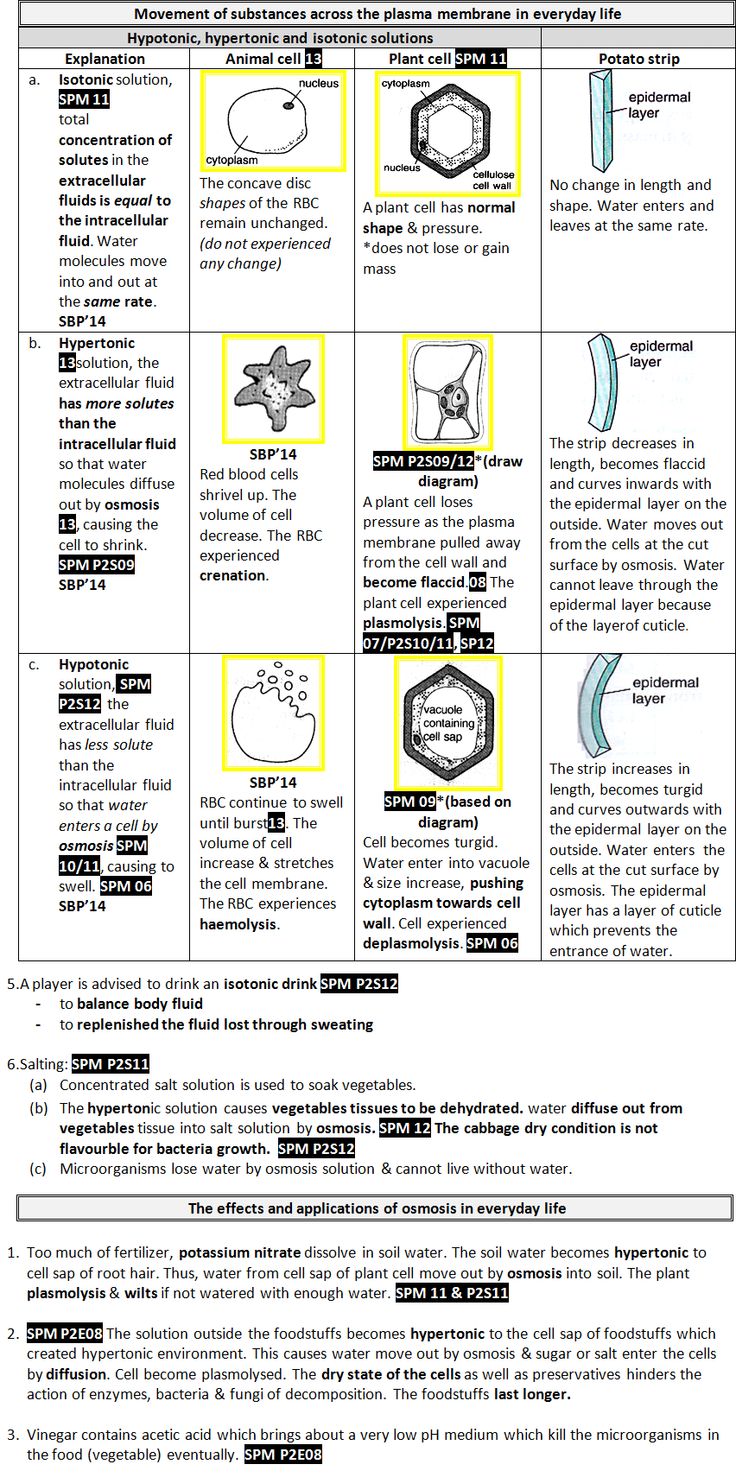
So if you get thirsty at the beach drinking seawater makes you even more dehydrated. If you place an animal or a plant cell in a hypertonic solution the cell shrinks because it loses water water moves from a higher concentration inside the cell to a lower concentration outside. A plant cell undergoes plasmolysis in a hypertonic solution. Hypertonic solutions make plant cells lose water. Plant cells do not lyse. If animal and plant cells are kept in isotonic solution then cells will not swell or shrink.
If animal and plant cells are kept in isotonic solution then cells will not swell or shrink.
When a plant cell is placed in hypertonic solution or a solution having higher concentration than that of the cell sac exo-osmosis occur and water comes out from the cell sac into the outer solution as a result of which the protoplasm shrinks and leaves the cell wall. If enough water is lost the cell will take on a wrinkled or. Hypertonic solutions have less water and more solute such as salt or sugar than a cell. For a discussion about what happens to a cell in a hypertonic solution solution refers to the extracellular environment. Plant cells however have a cell wall that allows them to maintain their shape. Therefore a hypertonic solution has more solutes than the intracellular environment so water will leave the cell to try to achieve equilibrium.
 Source: pinterest.com
Is salt water hypertonic. Therefore a hypertonic solution has more solutes than the intracellular environment so water will leave the cell to try to achieve equilibrium. The plant cell is said to have become turgid ie. If you place an animal or a plant cell in a hypertonic solution the cell shrinks because it loses water water moves from a higher concentration inside the cell to a lower concentration outside. What happens if a plant cell is placed in a hypertonic solution.
 Source: co.pinterest.com
Plant cells however have a cell wall that allows them to maintain their shape. Plants in Hypertonic. If you place an animal or a. The pressure inside the cell rises until this internal pressure is equal to the pressure outside. This liquid or hydrostatic pressure called turgor pressure prevents the.
 Source: pinterest.com
The pressure inside the cell rises until this internal pressure is equal to the pressure outside. If enough water is lost the cell will take on a wrinkled or. If you place an animal or a plant cell in a hypertonic solution the cell shrinks because it loses water water moves from a higher concentration inside the cell to a lower concentration outside. This occurs because of osmosis. When there are solutes on two sides of a.
 Source: pinterest.com
To regulate the amount of water in the body the human brain has special proteins called osmoreceptors. If you place an animal or a plant cell in a hypertonic solution the cell shrinks because it loses water water moves from a higher concentration inside the cell to a lower concentration outside. Hypotonic solutions have more water than a cell. To regulate the amount of water in the body the human brain has special proteins called osmoreceptors. Hypertonic solutions make plant cells lose water.
Source: pinterest.com
To regulate the amount of water in the body the human brain has special proteins called osmoreceptors. When the plant cell is placed in a hypotonic solution it takes up water by osmosis and starts to swell but the cell wall prevents it from bursting. So if you get thirsty at the beach drinking seawater makes you even more dehydrated. What happens if a plant cell is placed in a hypertonic solution. Hypertonic Solution Examples Human Kidney.
 Source: in.pinterest.com
This occurs because of osmosis. Hyper is a Latin prefix meaning over or above. Hypertonic Solution Examples Human Kidney. When the plant cell is placed in a hypotonic solution it takes up water by osmosis and starts to swell but the cell wall prevents it from bursting. A solution whose concentration is more than the cell sap or that inside a cell.
 Source: pinterest.com
This occurs because of osmosis. Lysis is when an animal cell bursts. A plant cell becomes turgid when putting in a hypotonic solution. So if you get thirsty at the beach drinking seawater makes you even more dehydrated. Hypotonic solutions have more water than a cell.
 Source: in.pinterest.com
If you place an animal or a plant cell in a hypertonic solution the cell shrinks because it loses water water moves from a higher concentration inside the cell to a lower concentration outside. The plant cell is said to have become turgid ie. If animal and plant cells are kept in isotonic solution then cells will not swell or shrink. A solution whose concentration is less than the cell sap or inside of a cell. When a plant cell is placed in hypertonic solution or a solution having higher concentration than that of the cell sac exo-osmosis occur and water comes out from the cell sac into the outer solution as a result of which the protoplasm shrinks and leaves the cell wall.
 Source: pinterest.com
In a hypotonic solution the animal cell becomes swelled and a plant cell becomes turgid as we can observe in the picture given below. What happens to plant cells in hypertonic solution. This liquid or hydrostatic pressure called turgor pressure prevents the. What happens if a plant cell is placed in a hypertonic solution. For a discussion about what happens to a cell in a hypertonic solution solution refers to the extracellular environment.
 Source: pinterest.com
If you place an animal or a. So if you get thirsty at the beach drinking seawater makes you even more dehydrated. Hypertonic solutions have less water and more solute such as salt or sugar than a cell. When there are solutes on two sides of a. When a plant cell is placed in hypertonic solution or a solution having higher concentration than that of the cell sac exo-osmosis occur and water comes out from the cell sac into the outer solution as a result of which the protoplasm shrinks and leaves the cell wall.
 Source: pinterest.com
Tapwater and pure water. If you place an animal or a plant cell in a hypertonic solution the cell shrinks because it loses water water moves from a higher concentration inside the cell to a lower concentration outside. For a discussion about what happens to a cell in a hypertonic solution solution refers to the extracellular environment. The plant cell is said to have become turgid ie. So if you get thirsty at the beach drinking seawater makes you even more dehydrated.
 Source: pinterest.com
If animal and plant cells are kept in isotonic solution then cells will not swell or shrink. This liquid or hydrostatic pressure called turgor pressure prevents the. When there are solutes on two sides of a. Hypotonic solutions have more water than a cell. This shrinking of protoplasm is known as plasmolysis and the cell or tissue is said to be plasmolysed.
 Source: pinterest.com
What happens if a plant cell is placed in a hypertonic solution. This means that for cells to. If you place an animal or a plant cell in a hypertonic solution the cell shrinks because it loses water water moves from a higher concentration inside the cell to a lower concentration outside. Hence there will not be any change in cells. Why do plant cells shrink in hypertonic solution.
 Source: pinterest.com
If you place an animal or a plant cell in a hypertonic solution the cell shrinks because it loses water water moves from a higher concentration inside the cell to a lower concentration outside. For a discussion about what happens to a cell in a hypertonic solution solution refers to the extracellular environment. So if you get thirsty at the beach drinking seawater makes you even more dehydrated. In a hypotonic solution the animal cell becomes swelled and a plant cell becomes turgid as we can observe in the picture given below. The plant cell is said to have become turgid ie.
 Source: pinterest.com
A solution whose concentration is more than the cell sap or that inside a cell. Hence there will not be any change in cells. What happens to plant cells in hypertonic solution. Plant cells however have a cell wall that allows them to maintain their shape. A plant cell undergoes plasmolysis in a hypertonic solution.
 Source: in.pinterest.com
Tapwater and pure water. When plant cells are placed in such solutions water will move from inside the plant cell to the outside of the cell resulting in the shrinking of the cell the cell is said to be plasmolyzed. If you place an animal or a plant cell in a hypertonic solution the cell shrinks because it loses water water moves from a higher concentration inside the cell to a lower concentration outside. Plants in Hypertonic. Hypertonic solutions make plant cells lose water.
 Source: pinterest.com
This shrinking of protoplasm is known as plasmolysis and the cell or tissue is said to be plasmolysed. When a plant cell is placed in hypertonic solution or a solution having higher concentration than that of the cell sac exo-osmosis occur and water comes out from the cell sac into the outer solution as a result of which the protoplasm shrinks and leaves the cell wall. This occurs because of osmosis. Tapwater and pure water. If you place an animal or a plant cell in a hypertonic solution the cell shrinks because it loses water water moves from a higher concentration inside the cell to a lower concentration outside.
 Source: pinterest.com
Tapwater and pure water. Hypertonic Solution Examples Human Kidney. Therefore a hypertonic solution has more solutes than the intracellular environment so water will leave the cell to try to achieve equilibrium. Pressure decreases to the point where the protoplasm of the cell peels away from the cell wall leaving gaps between the cell wall and the membrane and making the plant cell shrink and crumple. So if you get thirsty at the beach drinking seawater makes you even more dehydrated.
This site is an open community for users to submit their favorite wallpapers on the internet, all images or pictures in this website are for personal wallpaper use only, it is stricly prohibited to use this wallpaper for commercial purposes, if you are the author and find this image is shared without your permission, please kindly raise a DMCA report to Us.
If you find this site convienient, please support us by sharing this posts to your own social media accounts like Facebook, Instagram and so on or you can also save this blog page with the title a plant cell in hypertonic solution by using Ctrl + D for devices a laptop with a Windows operating system or Command + D for laptops with an Apple operating system. If you use a smartphone, you can also use the drawer menu of the browser you are using. Whether it’s a Windows, Mac, iOS or Android operating system, you will still be able to bookmark this website.


